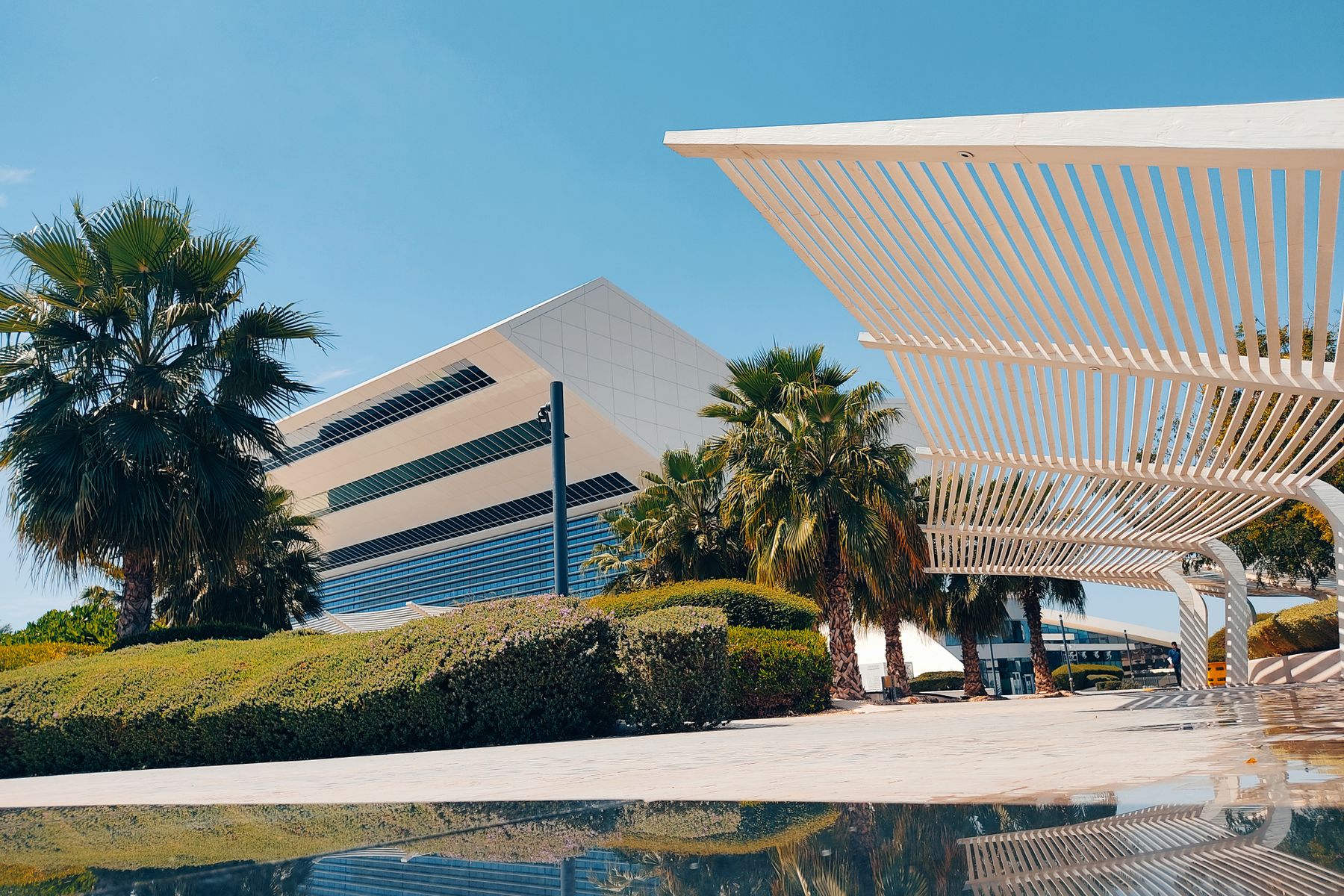
Start from the driver’s eye, not the plan. We ask for photographs taken from the approach road at vehicle height, because a piece positioned beautifully on a site plan can be entirely hidden by a canopy soffit at the angle guests actually arrive from.
Settle the evening condition early. A reflective piece that reads brilliantly at noon can disappear at eight in the evening unless the lighting is designed alongside the form. We work with the hotel’s lighting consultant rather than adding uplights afterwards, and integrated lighting is specified IP67 and accessible for lamp replacement without dismantling anything.
Design for the night closure. Almost every hotel installation happens inside a single window with guests still arriving, which means sectional design, a rehearsed sequence, load-spreading over any basement slab, and a crane position agreed with the operations team weeks in advance.
Specify a finish housekeeping can maintain. Satin stainless and waxed bronze survive a general maintenance team; polished and lacquered bronze needs a specialist on a five-year cycle, and if nobody budgets for that the piece will look neglected by year seven.
Assume contact. Anything within reach gets touched, leaned on and photographed against. Edges are radiused, patinas are chosen to polish rather than wear, and the base detail is designed to be cleaned around by a machine.
Finally, quote in stages. FF&E approval chains are long and fixed, and an indicative band at concept stage is worth more to a procurement team than a precise figure that arrives after the budget has been locked.